
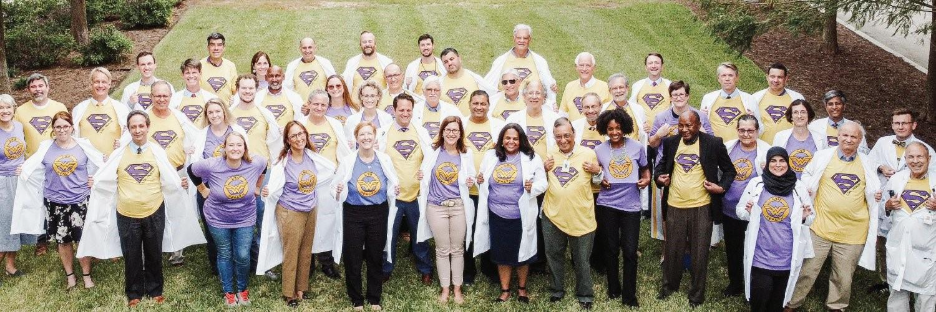
As the largest clinical department in the LSU School of Medicine (SOM), the Department of Medicine has over 100 faculty and more than 35 staff dedicated to the goal of excellence and innovation in education, service, and research.
100+
Faculty Members
200+
Residents and Fellows
400+
Gratis Faculty
13
ACGME-Accredited Fellowship Programs
Our doctors deliver clinical services in both academic and community hospitals in the New Orleans area. This diversity of practice locations provides a wide range of educational, service, and research opportunities.
In addition to our New Orleans campus, the Department of Medicine also includes campuses in Baton Rouge and Lafayette with outstanding faculty and residency programs.

Residency Programs
Each year, over 200 residents train at LSU Health New Orleans, gaining hands-on experience, expert mentorship, and the skills to become confident, compassionate clinicians and leaders. Our programs span Internal Medicine, Medicine/Pediatrics, Internal Medicine/Emergency Medicine, and Physical Medicine & Rehabilitation, offering the breadth and real-world experience needed to thrive.
Internal Medicine EMERGENCY MEDICINE IM - EM
MED - PEDS Physical Medicine & Rehabilitation
Fellowship Programs
The Department of Medicine offers 13 ACGME-accredited fellowship programs for physicians seeking advanced subspecialty training. Fellows refine their clinical skills, engage in research, and work closely with faculty mentors to gain the expertise, leadership, and scholarly foundation needed to excel in their fields.
Learn More About Our Fellowships

Research
At LSU Health New Orleans, research is at the heart of our mission to advance patient care and medical knowledge. Our faculty and trainees engage in innovative clinical and translational research, collaborate across disciplines, and contribute to discoveries that shape the future of medicine.