
 Quicklinks▼
 Careers
 Citrix Storefront
 Contact
 Departments & Centers
 Donate
 Emergency Preparedness
 Find Employees
 LSU Health New Orleans
 Intranet
 Moodle
 myLSUHSC
 Office 365
 Office 365 Mail
 Patient Care
 Remote VPN
 Self Service


 LSU Health New Orleans
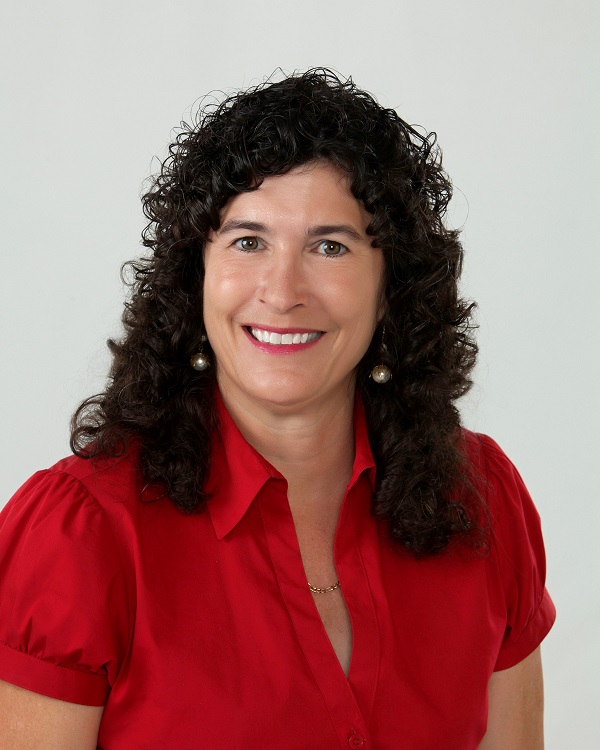
Carmen C. Canavier, Ph.D.
Carmen C. Canavier, Ph.D.
Professor and Chair
Department of Cell Biology and Anatomy
Professor and Chair
Department of Cell Biology and Anatomy
533 Bolivar St, 509
New Orleans, LA 70112
Phone: (504) 599-0486
ccanav@lsuhsc.edu
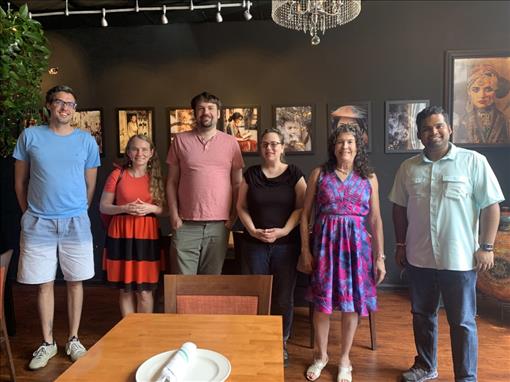
2023 Lab Members from left Roman Baravalle, Carol Upchurch, Chris Knowlton, Crescent Combe, Carmen Canavier and Ananth Vedururu Srinivas
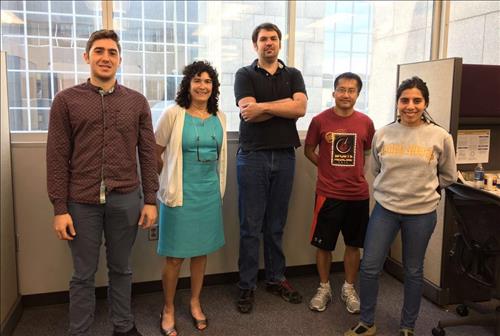
2016 Lab Members from left Dehan Elcin, Carmen Canavier, Chris Knowlton, Tony Tzeng and Luciana Lopez
2011 Lab Members from left to right: Lakshmi Chandrsekaran, Shuoguo Wang, Carmen Canavier, Sai Achuthan, Marco Huertas, Kun Qian, and Ruben Tikidji-Hamburyan
http://www.medschool.lsuhsc.edu/faculty/docs/canavier_retreat.pdf
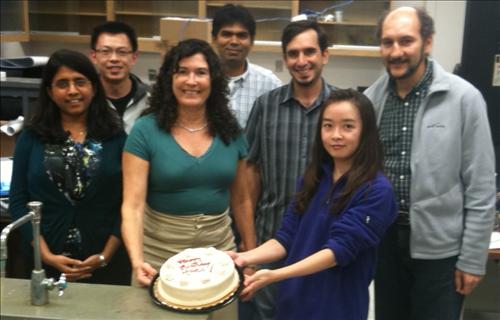
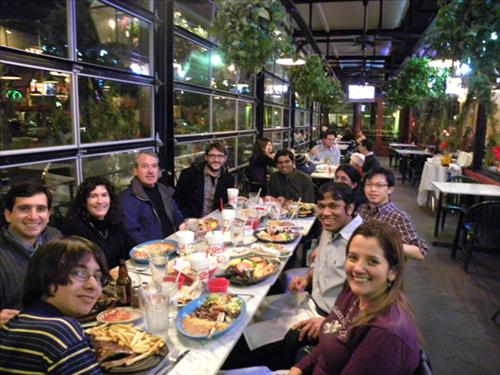
Selva's going away party with the Canavier Lab on the occasion of his doctorate.
Degrees
BE 1979
Vanderbilt University, Nashville TN
PhD 1991
Rice University, Houston TX
Bio
Positions:
2020 - present: Professor and Chair, Department of Cell Biology and Anatomy, LSU Health Sciences Center, New Orleans, LA
2011 - 2020: Professor and Vice-Chair for Research, Department of Cell Biology and Anatomy, LSU Health Sciences Center, New Orleans, LA
2009 - 2011: Professor of Neuroscience and Ophthalmology, LSU Health Sciences Center, New Orleans, LA
2005 – 2009: Associate Professor of Ophthalmology and Neuroscience, Neuroscience Center of Excellence, LSU Health Sciences Center, New Orleans, LA
2001-2005: Associate Professor, University of New Orleans
1999-2001: Assistant Professor, University of New Orleans
1997-1999: Associate Professor/Research, University of New Orleans
1995-1997: Research Assistant Professor, UT Health Sciences Center, Houston TX
1994-1995: Postdoctoral Fellow, UT Health Sciences Center, Houston TX
1993-1994: Research Fellow, Baylor Medical School, Houston TX
1991-1993: Postdoctoral Fellow, UT Health Sciences Center, Houston TX
Study Sections
NIH study section membership
1. Permanent Member of in house NINDS study section NSD-C Jan 1, 2003 - June, 2005.
2. Permanent Member of the Cognitive Neuroscience Study Section at the Center for Scientific Review October 2005 – June 30, 2009.
3. Permanent Member of the NIH Center for Scientific Review Biophysics of Neural Systems (BPNS) July 1, 2011 to June 30, 2014. Alternate Chair for June 5, 2014 meeting
4. Permanent Member of NINDS in house study section NST-2 reviewing F32s and K99/R00s, July 1, 2020-June 20, 2026.
Research Interests
Computational Neuroscience: Nonlinear Dynamics of Single Neurons and Small Networks
Oscillations and Synchrony: How do neurons synchronize their activity? How are pacemaking and bursting oscillations generated and modulated?
My major area of research interest is computational neuroscience, specifically the nonlinear dynamics of neurons and small networks, synchronization, oscillation, central pattern generation, bursting neurons, midbrain dopaminergic neurons, and the regulation of the firing pattern in neurons.
I have pursued two lines of research during my career. The first is the synchronization and phase locking of small networks of neurons. One application of this research is a better understanding of central pattern generating networks for respiration, locomotion, and other repetitive motor activities. I have utilized primarily a technique called phase resetting, or phase response curves. This technique can be applied to any cyclical process, and was developed initially to better understand circadian rhythms. I have contributed to the application of these methods to neural oscillators, which have additional complications such as threshold behavior and pulsatile coupling. I have published many original proofs regarding the synchronization of neural oscillators. These proofs utilize both nonlinear systems theory (manifested as phase resetting) and linear systems theory (manifested as stability analyses) applied to neural networks. Currently, I am collaborating with invertebrate electrophysiologists to test these methods in hybrid circuits comprised of one biological neuron and one computational model neuron using a technique called the dynamic clamp. One goal of this work is to generalize to larger oscillatory networks such as those observed in mammalian cortex.
The second line of research involves the biophysical basis of different firing patterns in neurons, such as regular pacemaker firing, burst firing and irregular firing. My initial work was on neuron R15 in Aplysia, but my current research focuses on the dopaminergic neurons of the mammalian midbrain. These neurons exhibit a wide variety of electrical activity both in a slice preparation and in the intact animal. In collaboration with electro-physiologists, this line of research focuses on how the intrinsic currents generate the firing pattern, and how they interact with synaptic currents and neuromodulators to produce alterations in the firing pattern. Dysfunctional dopaminergic signaling has been implicated in a number of diseases, and the firing pattern in these neurons, in particular the timing of burst firing, is thought to have important functional consequences. I utilize techniques from the mathematical field of nonlinear dynamics, including bifurcation theory, as well as computational techniques to simulate multi-compartment neurons, in order to synthesize the experimental data into a theoretical model of dopamine neurons. One goal of this research is to predict the effect of different types of plasticity as well as various pharmaceutical agents on the electrical activity of dopamine neurons.
Current Research
The work in my lab is computational in nature. Funded collaborations, generally use the Dynamic Clamp to integrate theory and experiment, and currently include the following experimental labs: Dr. Robert Butera (Georgia Tech), Dr. Astrid Prinz (Emory), Dr. Paul Shepard (Maryland Psychiatric Research Institute), Dr. Edwin Levitan (Pittsburgh Medical School), and Dr. John A. White (University of Utah). Synchronization of neural activity is one unifying theme of the research conducted in my lab. Synchronization in its broadest sense encompasses the generation of the phase locked patterns exhibited by the central pattern generators responsible for rhythmic activity such as respiration and locomotion. Hence we have developed general criteria under which such lockings can occur in oscillators in which the duration of the postsynaptic potential is short compared to a cycle period. Synchronized oscillations are also thought to underlie many aspects of cognition. Rapid, internally generated synchronization between distal regions in the brain that relies on intrinsic oscillation has been shown to be important for encoding, retention, and retrieval of information and proposed to underlie binding and conscious perception. Cross frequency synchronization between theta and gamma has been suggested to match the information stored in working memory with incoming sensory information, and synchronization between alpha and theta has been suggested as a mechanism for retrieving items from long-term memory and loading them in working memory. Synchronization of brain rhythms is known to be affected in most psychiatric disorders. We have recently produced a novel proof that synchrony is a generic solution of identical pulse coupled oscillators separated by a conduction delay, and shown that the robustness of the near synchronous solution in the presence of heterogeneity increases with coupling strength. We have also recently established existence and stability criteria for N:1 cross frequency lockings for pulse coupled oscil-lators. Another focus area is the oscillatory dynamics of bursting and pacemaking rhythms. The dopaminergic neurons of the mammalian midbrain have been extensively modeled in my lab. The coupled oscillator theory of the dopamine neurons holds that the spiking rate is usually driven by slow calcium oscillations in the soma and larger dendrites but during bursting the activation of distal NMDA receptors allows the smaller dendrites to dominate. Recently we have shown that in the presence of spiking activity, the intuition that the natural frequency of the smaller dendrites is faster does not hold. We have also recently suggested critical roles for the L-type calcium current and the SK potassium current in bursting activity, as well as a role for the ether a-go-go related potassium current in relieving depolarization block. Abnormal dopaminergic signaling has been implicated in Parkinson's, schizophrenia, and drug abuse.
Teaching Activities
Lecturer:
ANAT 264 - Synaptic Organization of the Brain
NEURO 203 - Investigative Neuroscience
SPM 100 - Houses Program, Basic Science Mentor, Napoleon House
ANAT 280 - Special Topics
Selected Publications
Recent Papers
Shin J, Kovacheva L, Thomas D, Stojanovic S, Knowlton CJ, Mankel J, Boehm J, Farassat N, Paladini C, Striessnig J, Canavier CC, Geisslinger G and Roeper J. Cav1.3 calcium channels are full-range linear amplifiers of firing frequencies in lateral DA SN neurons. Accepted by Science Advances
Upchurch CM, Combe CL, Knowlton CK, Rousseau V, Gasparini S and Canavier CC. Long-Term Inactivation of Sodium Channels as a Mechanism of Adaptation in CA1 Pyramidal Cells. J Neurosci. 2022 doi: 10.1523/JNEUROSCI.1914-21.2022. Online ahead of print. PMID: 35332085
Fernandez FR, Via G, Canavier CC and White JA. Kinetics and connectivity profile of Parvalbumin and Somatostatin-positive inhibition in layer 2/3 medial entorhinal cortex. eNeuro, 2022 Jan 31:ENEURO.0441-21.2022. doi:10.1523/ENEURO.0441-21.2022.
Knowlton C, Ziouziou TI, Hammer N, Roeper J, and Canavier CC. Inactivation mode of sodium channels defines the different maximal firing rates of conventional versus atypical midbrain dopamine neurons. PLoS Computational Biology. 17(9): e1009371. 2021
Diankun Yu, Isabella Febbo, Matthieu Maroteaux, H Wang, Yingnan Song, Xiao Han, Cheng Sun, Emily Meyer, Stuart Rowe, YP Chen, CC Canavier, and LA Schrader. The transcription factor Shox2 shapes neuron firing properties and suppresses seizures by regulation of key ion channels in thalamocortical neurons, Cerebral Cortex, March 2 2021, https://doi.org/10.1093/cercor/bhaa414
Tikidji-Hamburyan RA and Canavier CC. Shunting Inhibition Improves Synchronization in Heterogeneous Inhibitory Interneuronal Networks with Type 1 Excitability Whereas Hyperpolarizing Inhibition is Better for Type 2 Excitability, eNeuro. 2020 May 8;7(3):ENEURO.0464-19.2020. doi: 10.1523/ENEURO.0464-19.2020.
Tikidji-Hamburyan RA, Leonik CA and Canavier CC. Phase Response Theory Explains Cluster Formation in Strongly but Sparsely Connected Inhibitory Neural Networks and Effects of Jitter Due to Sparse Connectivity. Journal of Neurophysiol. 121:1125-1142 2019 doi: 10.1152/jn.00728.2018.
López-Jury L, Meza R, Brown MTC, Henny P and Canavier CC. Morphological and biophysical determinants of the intracellular and extracellular wave-forms in nigral dopaminergic neurons: A computational study. J Neurosci. 38:8295-8310, 2018. doi: 10.1523/JNEUROSCI.0651-18.2018.
Combe CL , Canavier CC and Gasparini S. Intrinsic mechanisms of frequency selectivity in the proximal dendrites of CA1 pyramidal neurons. J Neurosci. 38:8110-8127 2018. doi: 10.1523/JNEUROSCI.0449-18.201
Meza R, López-Jury L, Canavier CC* and Henny P. Role of the axon initial segment in the control of spontaneous frequency of nigral dopamine neurons in vivo,J Neurosci. 2018 Jan 17;38(3):733-744. * co-last author
Knowlton CJ, Kutterer S, Roeper J and Canavier CC. Calcium dynamics control K-ATP channel mediated bursting in substantia nigra dopamine neurons: a combined experimental and modelling study, J. Neurophysiol. 2018 Jan 1;119(1):84-95.
Canavier CC and Tikidji-Hamburyan RA. Globally Attracting Synchrony in a Network of Oscillators with All-to-All Inhibitory Pulse Coupling, Physical Review E 95(3):032215, 2017.
Canavier CC, Evans RC, Oster AM, Pissadaki EK, Drion G, Kuznetsov AS and Gutkin BS. Implications of cellular models of dopamine neurons for disease, J Neurophys, 116 :2815-2830, 2016 DOI: 10.1152/jn.00530.2016
Norman SE, Butera RJ, and Canavier CC. Stochastic Slowly Adapting Ionic Currents May Provide a Decorrelation Mechanism For Neural Oscillators by Causing Wander in the Intrinsic Period, J Neurophysiology, 116(3):1189-98, 2016.
Tikidji-Hamburyan RA, Martínez JJ, White JA, and Canavier CC. Resonant interneurons can increase robustness of gamma oscillations, J. Neurosci. 35:15682-95, 2015. F1000 recommended
Hooper RM, Tikidji-Hamburyan RA, Canavier CC, and Prinz AA. Feedback Control of Variability in the Cycle Period of a Central Pattern Generator, J Neurophysiol. 2015 Nov;114(5):2741-52. doi: 10.1152/jn.00365.2015.
Yu N and Canavier CC. A mathematical model of a midbrain dopamine neuron identifies two slow variables likely responsible for bursts evoked by SK channel antagonists and terminated by depolarization block. The Journal of Mathematical Neuroscience (JMN) 2015, 5:5 doi:10.1186/s13408-015-0017-6
Canavier CC. Phase resetting as a tool of information transmission. Current Opinion in Neurobiology,Volume 31, April 2015, pages 206–213.
Qian K, Yu N, Tucker KR, Levitan ES and Canavier CC. Mathematical analysis of depolarization block mediated by slow inactivation of fast sodium channels in midbrain dopamine neurons. J. Neurophysiol. 2014 112(11):2779-90.
Thounaojam US, Cui J, Norman SE, Butera RJ and Canavier CC. Slow noise in the period of a biological oscillator underlies gradual trends and abrupt transitions in phasic relationships in hybrid neural networks. PLoS Comput Biol 2014 10(5): e1003622. doi:10.1371/journal.pcbi.1003622
Tikidji-Hamburyan R, Lin EC, Gasparini S and Canavier CC. Effect of Heterogeneity and Noise on Cross Frequency Phase-Phase and Phase-Amplitude Coupling.Network: Computation in Neural Systems 25:38-62, 2014.
Canavier CC, Wang S, and Chandrasekaran L. Effect of Phase Resetting Skew on Synchronization with and without Conduction Delays.Front Neural Circuits. 2013 Dec 11;7:194. doi: 10.3389/fncir.2013.00194.
Wang S, Musarof M, Canavier CC and Gasparini S. Hippocampal CA1 pyramidal cells exhibit Type 1 phase response curves and excitability.J Neurophysiol 109: 2757–2766, 2013.
Tucker KR, Huertas MA, Horn JP, Canavier CC, Levitan ES. Pacemaker rate and depolarization block in nigral dopamine neurons: a somatic sodium channel balancing act.J Neurosci. 2012 Oct 17;32(42):14519-31. doi: 10.1523/JNEUROSCI.1251-12.2012. PMID: 23077037 [PubMed - indexed for MEDLINE]
Sieling FH, Archila S, Hooper R, Canavier CC, Prinz AA. Phase response theory extended to nonoscillatory network components. Phys Rev E Stat Nonlin Soft Matter Phys. 2012 May;85(5 Pt 2):056208. Epub 2012 May 14. PMID: 23004844 [PubMed - in process]Free PMC Article
Ji H, Tucker KR, Putzier I, Huertas MA, Horn JP, Canavier CC, Levitan ES, Shepard PD. Functional characterization of ether-à-go-go-related gene potassium channels in midbrain dopamine neurons - implications for a role in depolarization block. Eur J Neurosci. 2012 Oct;36(7):2906-16. doi: 10.1111/j.1460-9568.2012.08190.x. Epub 2012 Jul 11. PMID: 22780096 [PubMed - in process]
Wang S, Chandrasekaran L, Fernandez FR, White JA, Canavier CC. Short conduction delays cause inhibition rather than excitation to favor synchrony in hybrid neuronal networks of the entorhinal cortex. PLoS Comput Biol. 2012 Jan;8(1):e1002306. doi: 10.1371/journal.pcbi.1002306. Epub 2012 Jan 5. PMID: 22241969 [PubMed - indexed for MEDLINE] Free PMC Article
Maran SK, Sieling FH, Demla K, Prinz AA, Canavier CC. Responses of a bursting pacemaker to excitation reveal spatial segregation between bursting and spiking mechanisms. J Comput Neurosci. 2011 Oct;31(2):419-40. doi: 10.1007/s10827-011-0319-y. Epub 2011 Mar 1. PMID: 21360137 [PubMed - indexed for MEDLINE] Free PMC Article
Woodman MM, Canavier CC. Effects of conduction delays on the existence and stability of one to one phase locking between two pulse-coupled oscillators. J Comput Neurosci. 2011 Oct;31(2):401-18. doi: 10.1007/s10827-011-0315-2. Epub 2011 Feb 23. PMID: 21344300 [PubMed - indexed for MEDLINE] Free PMC Article
Sieling FH, Canavier CC, Prinz AA. Inclusion of noise in iterated firing time maps based on the phase response curve. Phys Rev E Stat Nonlin Soft Matter Phys. 2010 Jun;81(6 Pt 1):061923. Epub 2010 Jun 25. PMID: 20866456 [PubMed - indexed for MEDLINE] Free PMC Article
Chandrasekaran L, Achuthan S, Canavier CC. Stability of two cluster solutions in pulse coupled networks of neural oscillators. J Comput Neurosci. 2011 Apr;30(2):427-45. doi: 10.1007/s10827-010-0268-x. Epub 2010 Aug 20. PMID: 20725773 [PubMed - indexed for MEDLINE] Free PMC Article
Achuthan S, Butera RJ, Canavier CC. Synaptic and intrinsic determinants of the phase resetting curve for weak coupling. J Comput Neurosci. 2011 Apr;30(2):373-90. doi: 10.1007/s10827-010-0264-1. Epub 2010 Aug 11. PMID: 20700637 [PubMed - indexed for MEDLINE] Free PMC Article
Canavier CC, Achuthan S. Pulse coupled oscillators and the phase resetting curve. Math Biosci. 2010 Aug;226(2):77-96. doi: 10.1016/j.mbs.2010.05.001. Epub 2010 May 10. Review. PMID: 20460132 [PubMed - indexed for MEDLINE] Free PMC Article
Kuznetsova AY, Huertas MA, Kuznetsov AS, Paladini CA, Canavier CC. Regulation of firing frequency in a computational model of a midbrain dopaminergic neuron. J Comput Neurosci. 2010 Jun;28(3):389-403. doi: 10.1007/s10827-010-0222-y. Epub 2010 Mar 10. PMID: 20217204 [PubMed - indexed for MEDLINE] Free PMC Article
Additional Info
Funding
NIH/NIDA 1R01DA041705 “A Dynamic Diversity of Dopamine Neurons” 4/1/2017-1/30/2022 , PI
The goal of this project is to determine the biophysical mechanisms underlying the differences in dynamic range and bursting mechanisms in distinct subpopulations of dopamine neurons. Collaborative with Jochen Roeper
NIH/NIMH 1R01MH115832 “CRCNS: Cholinergic contribution to hippocampal information processing”, 08/15/2017 – 05/31/2022, PI (multi-PI grant with Sonia Gasparini)
The goal of the project is to understand the effects of cholinergic modulation on the response of CA1 pyramidal neurons to a triangular ramp of depolarization such as that observed on a run through the place field, and on the low pass filtering in the proximal dendrites that favors slow gamma over fast gamma.
NIH/NINDS 2R01NS054281-10A1 “Synchronization in Noisy, Heterogeneous Excitatory/Inhibitory Networks” 08/01/2018-03/31/2023 , PI
The goal of this project is to understand synchronization in the gamma frequency range, specifically the contribution of PV+ fast spiking interneurons with Hodgkin’s type 2 excitability and how to differentiate different underlying oscillatory mechanisms. Collaborative with John White
Previous Funding
"Mentoring Neuroscience in Louisiana: A Biomedical Program to Enhance Neuroscience"
Computational Core Director and Mentor: Carmen C. Canavier, Ph.D.
Agency: NIH/NIGMS (P30GM103340)
Period: 09/01/2012-5/31/2017
"Collaborative Research in Computational Neuroscience: Analysis of synchronization in hybrid neural circuits"
Principal Investigator: Carmen C. Canavier, Ph.D.
Agency: NIH-NINDS (R01NS054281)
Period: 09/15/2005-05/31/2015
"Intrinsic currents modulate synaptic integration in dopamine neurons"
Principal Investigator: Carmen C. Canavier, Ph.D.
Agency: NIH-NINDS (R01NS061097)
Period: 01/01/2009-12/31/2013
"Phase resetting predicts synchronization in hybrid hippocampal circuits"
Principal Investigators: Carmen C. Canavier, Ph.D. and John A White, Ph.D.
Agency: NIH-NIMH (R01MH085387)
Period:08/20/2008-06/30/2011