
Dicle Yalcin, PhD
dyalci@lsuhsc.edu
Assistant Professor
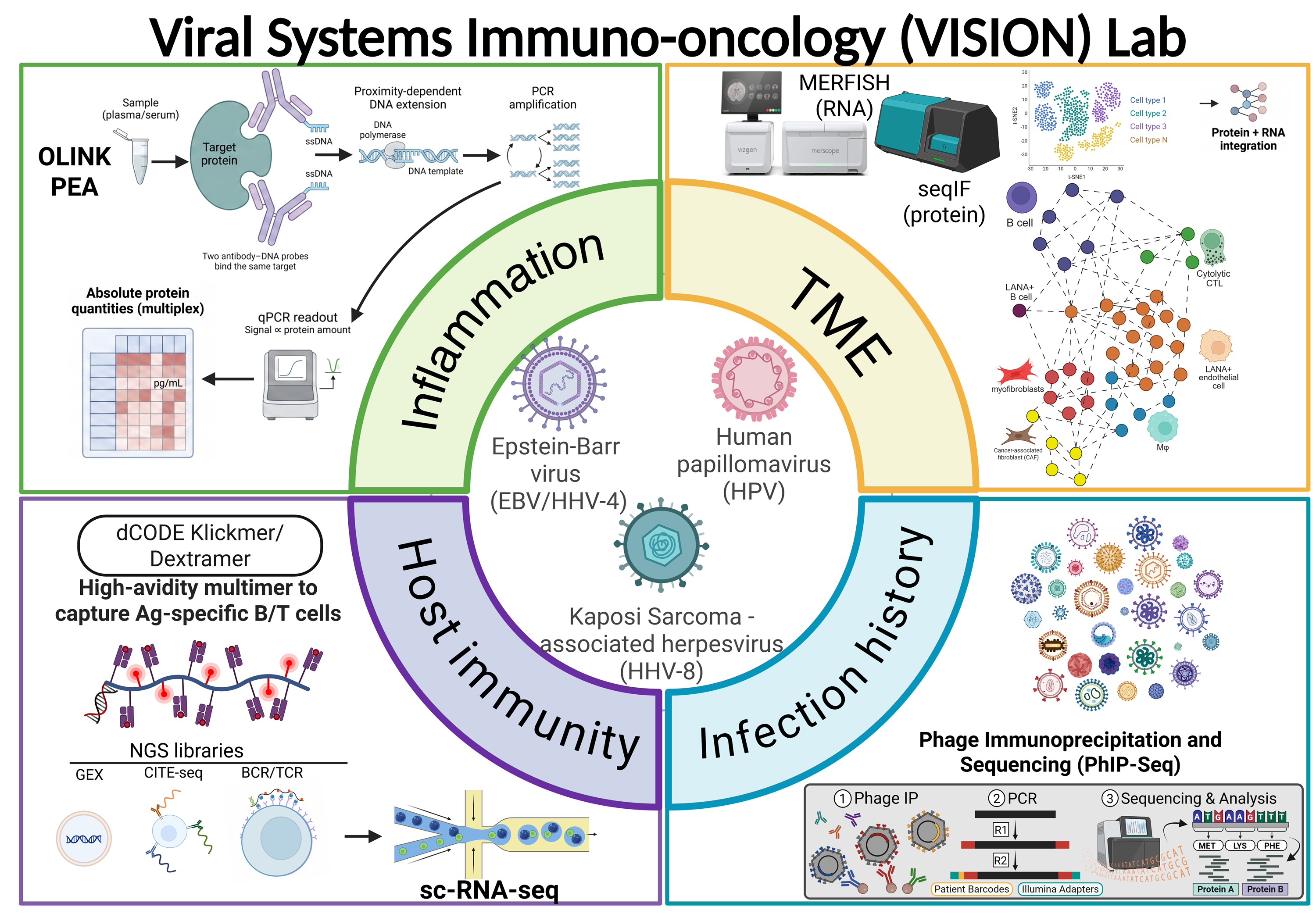
Dr. Yalcin’s VISION Lab develops multi-omics and machine-learning approaches to identify immune, inflammatory, and viral biomarkers associated with cancer onset, progression, and treatment outcomes. The lab focuses primarily on Kaposi sarcoma (KS), a virus-associated cancer with markedly increased incidence in people living with HIV and investigates how HIV-1 and other prior or concurrent viral infections reprogram host immunity and shape therapeutic response.
Dr. Yalcin is building a multidisciplinary research and training program grounded in her background in bioinformatics, engineering, computer science, and viral immuno-oncology. Using longitudinal cohorts from sub-Saharan Africa, including Uganda, Tanzania, and Zambia, the lab analyzes plasma, PBMC, and tissue biospecimens collected before and during antiretroviral therapy and chemotherapy to define immune dynamics associated with KS treatment outcomes. Core technologies include virome-wide antibody profiling by PhIP-seq/VirScan, single-cell BCR/TCR sequencing to resolve antigen-specific lymphocyte populations, Olink plasma proteomics to quantify systemic inflammatory states, and spatial-omics platforms to characterize cancer-associated fibroblast states and immune exclusion within the tumor microenvironment.
In addition to KS, the lab’s efforts extend to cervical neoplastic progression and
the spatial regulation of cryptic/non-canonical antigen presentation in early- and
late-stage pancreatic ductal adenocarcinoma. Dr. Yalcin actively mentors graduate
students and postdoctoral researchers in bioinformatics, machine learning/AI, spatial
biology, and high-dimensional data analysis, and welcomes trainees interested in developing
strong computational foundations as they pursue technology-driven cancer research.
NCBI Bibliography
Google Scholar
LinkedIn
GitHub