
 Quicklinks▼
 Careers
 Citrix Storefront
 Contact
 Departments & Centers
 Donate
 Emergency Preparedness
 Find Employees
 LSU Health New Orleans
 Intranet
 Moodle
 myLSUHSC
 Office 365
 Office 365 Mail
 Patient Care
 Remote VPN
 Self Service


 LSU Health New Orleans
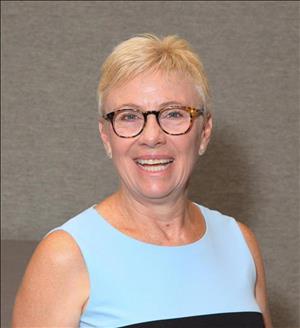
Paula Gregory, PhD
Assistant Dean for Medical Student Research
LSU School of Medicine
Professor, Depts. Genetics and Cell Biology & Anat.
Assistant Dean for Medical Student Research
LSU School of Medicine
Professor, Depts. Genetics and Cell Biology & Anat.
533 Bolivar Street
New Orleans, LA 70112
Phone: (504) 568-6153
Fax: (504) 568-8500
pgrego@lsuhsc.edu
Degrees
B.S. - University of Southern Mississippi
M.S. (Cytogenetics) - University of Southern Mississippi
Ph.D. (Cancer Cytogenetics) - Tulane University
Bio
Dr. Paula Gregory is a Mississippi native. She received both her BS and MS. degrees at the University of Southern Mississippi. Her PhD research was carried out at Tulane University on cancer cytogenetics. For her postdoctoral training, she worked with Dr. Bill Brinkley at the University of Alabama at Birmingham and did further training with Dr. Francis Collins at the University of Michigan. While at U of M, she started the first Education Program within a Human Genome Center. In 1993, she started the Genetics Education Office of the National Institute for Human Genome Research within the National Institutes of Health, as a national extension of her work at U of M. While at the NIH, she started several new and innovative educational programs for the media, policy makers, students, faculty and the public. These efforts earned her the NHGRI Award of Merit, NIH Director's Award, the NIH Award of Merit.
She accepted a faculty position at The Ohio State University in 1997 and began research focused on cancer genetics education. At OSU, she became the faculty director of the Landacre Society, a medical student research group and was awarded two NCI grants to fund cancer genetics education programs. She was awarded the Champions of the James award for her work in educating the public about hereditary cancers. In 2002, Dr. Gregory joined the Department of Genetics at LSUHSC. Dr. Gregory was awarded the Copping Award for Excellence in Education in 2013, this award is voted on by both the medical students and the faculty and is the highest teaching award given by LSUHSC. She was the Director of Faculty Development for the School of Medicine for 8 years, where she developed several programs designed to facilitate faculty career transitions and their success. She was promoted to full professor in 2013 and became an Assistant Dean in 2017.
She has been awarded four NIH grants to fund Summer Research Internships (genetics summer series) for high school, undergraduates and medical students.This program supports students to work in a variety of research labs during the summer. It also provides a summer seminar series for the students and travel scholarships for interns to attend scientific meetings.
Dr. Gregory is the Co-Director of the Career Development and Mentoring Core of the Louisiana Clinical and Translational Science (LACaTS) program. The LACaTS is a multi-institutional center that includes Pennington Biomedical Research Center, Tulane University Medical School and LSUHSC with funding from the NIH. The Mentoring and Career Development Core provides research mentoring and formal training in clinical/translational research for junior faculty from the member institutions. Dr. Gregory is also a career mentor for the COBRE program in Viral Oncogenesis.
In 2017, Dr. Gregory was appointed Assistant Dean of Medical Student Research within the Office of Student Affairs. In this position she coordinates the training and resources to facilitate research for medical students, residents/fellows and the faculty who are mentoring them. Her goal is to make getting involved with research as easy as possible. She directs the Summer Research Opportunities for Medical Students program that funds students in the L1-L2 summer. Dr. Gregory is the course director for the Longitudinal Research Selective available to L2 students and the Senior Research Elective for L4s. She is the Faculty Director of the Medical Student Honors Program that supports student research and graduation "with Honors" upon completion of a research thesis. Dr. Gregory's role in research training continues to grow as more students and faculty access her expertise.
Research Interests
Dr. Gregory's expertise is in hereditary cancers and she has begun to examine the incidence of colorectal cancer among the Cajuns. The young age of onset of these tumors suggests they have a hereditary origin. She is working with LSU physicians in Lafayette to determine whether there is a genetic founder affect that is causing the high incidence of colon cancer in Acadians.
Teaching Activities
Dr. Gregory is the Course Director for the Medical Genetics course for first year medical students.
Dr. Gregory also lectures in the Microanatomy (Histology) course for first year medical students.
Dr. Gregory teaches in several graduate level courses, including two course that she created, Proposal Writing and Responsible Conduct of Research.
She also helped create a genetics course for nursing students, Genetics Throughout the Lifespan and a Clinical Genetics course for the new LSUHSC Physician Assistant's Program.
Committees & Administrative Responsibilities
Dr. Gregory is a member of several School of Medicine committees, including:
- Women's Affairs Committee
- Faculty Development and Evaluation Committee
- Research Advisory Committee
- Student Promotions Committee
- Junior Faculty Guidance and Mentoring Committee
Selected Publications
Munn M, Skinner PO, Conn L, Horsma HG, Gregory P, The involvement of genome researchers in high school science education., Genome Res 9(7):597-607, 1999.
Wijmenga C, Gregory PE, Schrock E, Ried T, Eils R, Liu PP, Collins FS, The CBF--SMMHC chimeric protein involved in acute myeloid leukemia forms novel nuclear plate-like structures in transformed NIH 3T3 cells., Proc Natl Acad Sci USA 93:1630-1635, 1996.
Gregory PE, Guttmann DH, Mitchell AL, Park S, Jacks T, Wood DL, Boguski M, Jove R, Collins FS, The neurofibromatosis type gene product co-localizes with microtubules., Somat Cell Mol Genet 3:265-274, 1993.
Wallace MR, Anderson LB, Saulino A, Brereton A, Gregory PE, Glover TW, Collins FS, A de novo Alu insertion results in neurofibromatosis type 1., Nature 353:864, 1991.
Bunnell BA, Fillmore H, Gregory PE, Kidd VJ, A dominant negative mutation in two proteins created by ectopic expression of an Au-rich 3' untranslated region., Somat Cell Mol Genet 16:151-162, 1989.