
Spotlight: National Cancer Institute Representatives Share Cancer Research Priorities with Campus
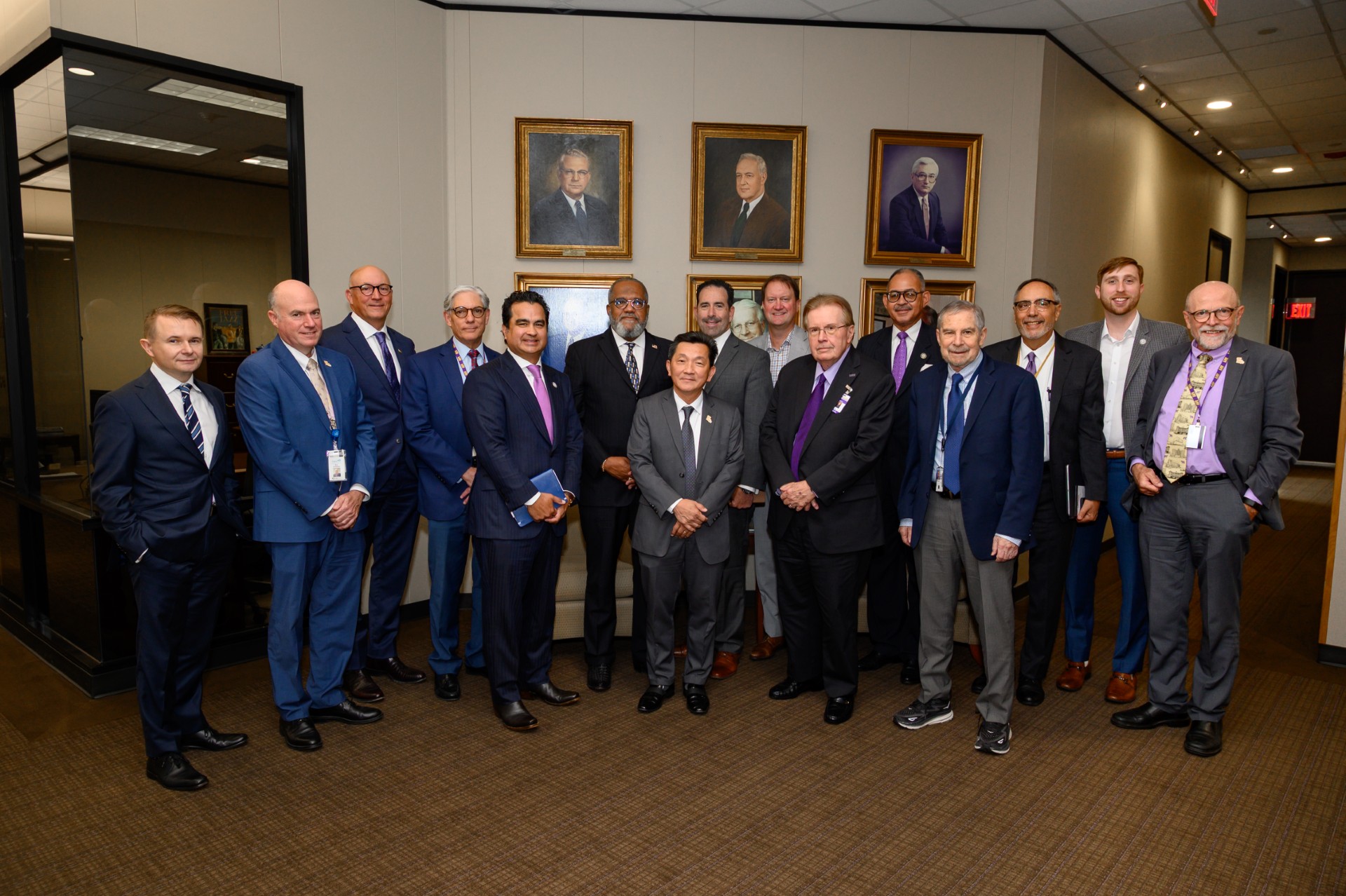 Douglas Lowy, MD, Deputy Director of the National Cancer Institute (NCI) recently
visited LSU Health Sciences Center to discuss NCI research priorities. Dr. Lowy has
served as the NCI’s principal Deputy Director since 2010, acting as NCI Director on
five separate occasions. He also chairs the NIH Clinical Center Governing Board. As
director of a cancer research laboratory at NCI, Dr. Lowy has made landmark contributions—from
advancing understanding of RAS oncoproteins, mutated in about one-third of cancers,
to developing the technology behind the three FDA-approved HPV vaccines. His achievements
have earned him election to the National Academy of Sciences and National Academy
of Medicine, as well as the Lasker–DeBakey Clinical Medical Research Award, often
referred to as the “American Nobel Prize.”
Douglas Lowy, MD, Deputy Director of the National Cancer Institute (NCI) recently
visited LSU Health Sciences Center to discuss NCI research priorities. Dr. Lowy has
served as the NCI’s principal Deputy Director since 2010, acting as NCI Director on
five separate occasions. He also chairs the NIH Clinical Center Governing Board. As
director of a cancer research laboratory at NCI, Dr. Lowy has made landmark contributions—from
advancing understanding of RAS oncoproteins, mutated in about one-third of cancers,
to developing the technology behind the three FDA-approved HPV vaccines. His achievements
have earned him election to the National Academy of Sciences and National Academy
of Medicine, as well as the Lasker–DeBakey Clinical Medical Research Award, often
referred to as the “American Nobel Prize.”
Dr. Lowy was joined by Krzysztof Ptak, PhD, Director of NCI Cancer Centers. Their visit provided faculty with the opportunity to hear directly from a national leader in cancer research.
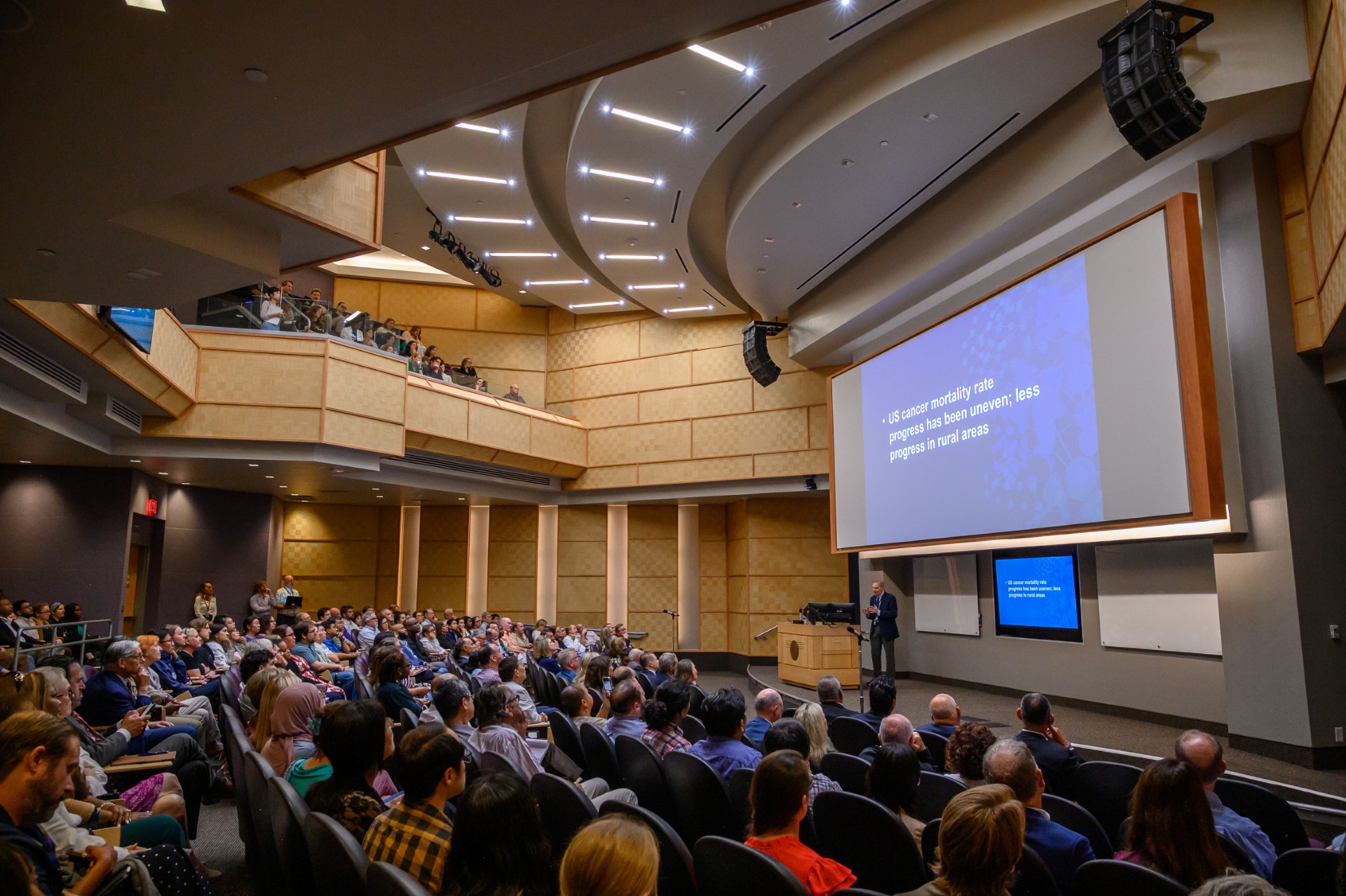 Dr. Lowy began his presentation by sharing NCI’s mission: to lead, conduct, and support
cancer research across the nation to advance scientific knowledge and help all people
live longer, healthier lives.
Dr. Lowy began his presentation by sharing NCI’s mission: to lead, conduct, and support
cancer research across the nation to advance scientific knowledge and help all people
live longer, healthier lives.
He then shared some of the key cancer statistics that drive NCI’s priorities:
- Decreasing cancer mortality rates since 1990 mean that ~300,000 Americans will not die from cancer this year who would have died at 1990 mortality rates.
- These improved mortality rates are due to:
- A better understanding of how cancer develops, including the roles of specific genes and the immune system;
- Prevention, screening, and treatment interventions;
- Decreasing tobacco consumption; and
- Life-saving interventions for each of the four most common cancers: Lung, colorectal, breast, and prostate cancer.
- Lung cancer is still the leading cause of cancer deaths.
- Arkansas, Kentucky, Mississippi, Oklahoma, and West Virginia have the highest cancer rates.
- As age-adjusted mortality rates from heart disease and cancer have fallen, rural-urban disparities have increased. Cancer mortality rates decreased faster in urban areas than rural areas from 2000-2023. In 2000, rural cancer mortality rates were three percent higher than urban cancer rates; in 2023, rural cancer rates were 16 percent higher than urban cancer rates. From 2000-2023, rural cancer mortality rates decreased 20 percent, but urban rates decreased 30 percent.
- Although Louisiana’s cancer mortality rates have been higher than the national average, the gap is narrowing.
- Addressing disparities in lung, breast, colorectal, and prostate cancer could eliminate ~75 percent of Louisiana’s “excess” mortality rate. Addressing liver and kidney cancer in addition could eliminate ~90% of the excess Lung, prostate, breast, and colorectal cancer make up ~75 percent of overall cancer mortality gap.
- Increasing uptake of recommended screening strategies could reduce the nation’s cancer burden.
With these statistics in mind, key NCI goals include:
- Research that accelerates reductions in cancer mortality rates;
- Research that narrows gaps in cancer mortality rates among populations with disparate outcomes; and
- Research on childhood cancers, rare adult cancers, cancers with historically poor outcomes, and early onset cancers.
NCI priorities include:
- High impact research not independently supported by others, from basic to applied, including development of new technology, dose de-escalation trials;
- Working with groups when feasible, including other NIH institutes, CDC, FDA, and CMS, state health agencies, and/or with public-private partnerships;
- Cancer workforce development;
- Cancer prevention and screening research;
- Early detection and treatment research; and
- Implementation research to more widely disseminate standard of care.
Dr. Lowy was supportive of LSU Health New Orleans attaining NCI designation and said that NCI-designated cancer centers are engines of discovery for cancer research, as sites for clinical trials, sources of high-quality patient care, and community outreach that improves cancer care. NCI-designated cancer centers also provide training and education.
Most NCI-supported research can be divided among three areas:
- Research that increases understanding of the cancer process;
- Research that can lead to new standards of care; and
- Research that more widely disseminates current standards of care.
Dr. Lowy concluded the presentation by explaining that in Louisiana and most other places with “excess” cancer mortality rates, a limited number of cancer types account for the vast majority of the higher rate, so that in terms of cancer control, it might be reasonable to consider focusing on the cancer types that contribute to the “excess” mortality.
“As we pursue NCI designation for LSU and Louisiana, we were thrilled to host Drs. Lowy and Ptak and proud to have the opportunity to highlight the groundbreaking work taking place here to prevent and treat the cancers impacting our Louisiana communities,” said Chancellor Steve Nelson.